
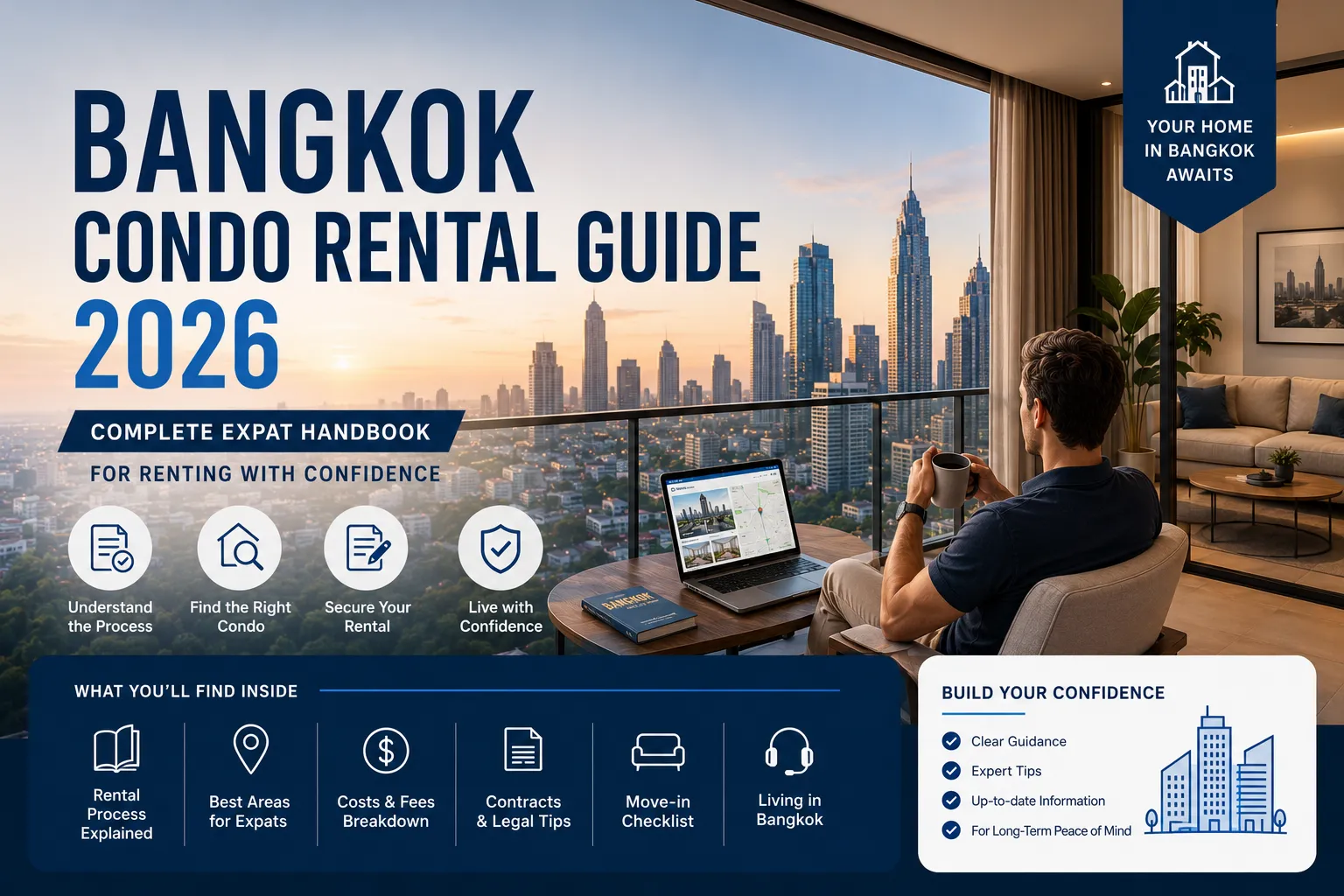
Bangkok Condo Rental Guide 2026: Complete Expat Handbook for Renting with Confidence
"Renting a condo in Bangkok in 2026? Read our complete handbook covering lease contracts, utility rates, TM30 address reports, and verified condo search options."
auto_awesomeQuick AI Summary
Bangkok Condo Rental Guide 2026: Complete Expat Handbook for Renting with Confidence
ℹ️ Bangkok is one of the most exciting and welcoming destinations for expats, digital nomads, and international professionals. Offering a unique combination of rich culture, world-class amenities, and highly competitive cost of living, the city attracts thousands of newcomers every year. However, navigating the local rental market can be challenging for those unfamiliar with its conventions. From understanding landlord relationships to coordinating TM30 immigration filings, this comprehensive 2026 guide equips you with the knowledge to rent your Bangkok condo with absolute confidence.
---
1. Understanding the Bangkok Rental Ecosystem
To navigate the market successfully, expats must understand how the local property landscape operates:
- Individual Landlords: Unlike in some Western markets where entire high-rises are owned and managed by a single corporate entity, the vast majority of condos in Bangkok are owned by individual private landlords. This means room layouts, interior design quality, maintenance responsiveness, and lease negotiations vary significantly from one unit to another.
- The Juristic Office (Condo Management): The building's juristic team manages only the common areas (lobby, gym, pool, security, and waste disposal). They do not represent the owner, maintain unit interiors, or assist with disputes between tenants and landlords.
- The Agent Network: The market relies heavily on independent real estate agents. Because there is no centralized Multiple Listing Service (MLS), listings on the open web are frequently outdated, leading to high rates of duplicate postings and bait-and-switch listings on open social channels.
---
2. Expat Neighborhood Guide: Choosing Where to Live
Bangkok is a collection of diverse neighborhoods, each offering a distinct lifestyle:
- Mid-Sukhumvit (Phrom Phong - Thonglor - Ekkamai):
- The Vibe: The premier expat hub. Filled with international restaurants, high-end shopping malls (EmQuartier, Emsphere), international schools, and modern family amenities.
- Price Range: High (typically 25,000 to 80,000+ THB/month for a 1-to-2 bedroom condo).
- Recommended Condos: Park Origin Phrom Phong, Park Origin Thonglor
- The New CBD (Asoke - Rama 9):
- The Vibe: Modern, high-energy business district. Home to major multinational offices, shopping centers, and excellent transit connectivity (the BTS Skytrain and MRT Subway interchange at Asoke).
- Price Range: Moderate to High (typically 18,000 to 45,000 THB/month).
- Recommended Condos: One 9 Five Asoke-Rama 9, Rhythm Asoke
- Ari - Phahon Yothin:
- The Vibe: A quieter, hipster-friendly neighborhood with tree-lined streets, local cafes, and boutique dining. Excellent for remote workers seeking a more residential, local feel.
- Price Range: Moderate (typically 15,000 to 35,000 THB/month).
- Recommended Condos: Noble ReD
- Sathorn - Silom:
- The Vibe: The traditional financial center. Borders Lumpini Park and features upscale dining, rooftop bars, and close proximity to embassy compounds.
- Price Range: High (typically 25,000 to 70,000+ THB/month).
- Recommended Condos: Ashton Silom, Life Sathorn Sierra
---
3. Monthly vs. Yearly Leases: Key Considerations
Understanding lease terms is crucial for planning your budget and stay length:
- The Standard 1-Year Lease: This is the most common contract type in Thailand. Landlords generally offer their best rental rates for 12-month commitments, and building amenities (gym/pool) are included in the rental price.
- Short-Term Leases (1 to 3 Months): Finding short-term condo rentals is more challenging. Under Thai condominium rules, short-term rentals (daily/weekly) are heavily regulated and often prohibited in residential towers to discourage hotel-style traffic. Owners who do accept short-term stays typically charge a premium of 15% to 30% above standard rates to offset vacancy risks. Tenant building rules and short-stay terms should be confirmed with the property before booking.
---
4. Cost Breakdown: Deposits, Utilities, and hidden costs
Ensure your budget accounts for all upfront and ongoing expenses:
- Security Deposit: The standard requirement is 2 months' rent as a security deposit plus the first month's rent paid in advance (a total of 3 months upfront). This deposit is refundable upon lease termination, minus any verified, non-standard damages.
- Electricity:
- Important Warning: Electricity should always be billed directly at the government rate from the Metropolitan Electricity Authority (MEA), which averages 4-5 THB per unit (kilowatt-hour). Be sure to check your lease agreement to ensure the landlord does not add arbitrary surcharges.
- Water: Managed and billed directly by the condo's juristic office. It is relatively inexpensive, averaging 18-25 THB per unit, and is paid monthly or quarterly.
- Internet: Fiber optic broadband is widely available, with packages starting around 500 to 900 THB/month. Most providers require a 12-month contract, though some units come with internet pre-installed by the landlord.
---
5. Expat Physical Viewing Checklist
Before signing a lease agreement or transferring funds, perform a thorough physical walkthrough of the unit:
- Air Conditioning Check: Turn on all AC units. Ensure they cool quickly and operate quietly. Inefficient units will result in high monthly electricity bills.
- Water Pressure & Drainage: Turn on showers, flush toilets, and check under sinks for any leaks or water pressure drop-offs.
- Appliance Audit: Verify that the refrigerator, washing machine, microwave, and TV are in working order.
- Noise Audit: Sit in the main living space with windows closed to evaluate street noise, BTS/MRT train sounds, or noise from nearby nightlife venues.
- Document Pre-existing Damage: Take detailed photos and videos of any scuffs, wall marks, or fabric stains. Send these to the agent and landlord immediately to ensure they are documented as pre-existing, preventing deposit disputes later.
---
6. Documentation and Immigration Compliance for Expats
Renting a condo in Thailand involves specific legal obligations that expats must monitor:
- Passport: You must provide a clear copy of your passport page showing a valid entry visa stamp (such as a Work Permit, DTV, or LTR visa).
- TM30 Reporting:
📢 Under Thai immigration law, the property owner (landlord) is legally obligated to report the residence of any foreign national residing in their unit to the Immigration Department within 24 hours of arrival. Expats must confirm that their landlord is cooperative and prepared to complete this filing, as a missing TM30 can result in fines and delay visa extensions or 90-day reporting.
- Bilingual e-Contracts: Always request legally binding bilingual (English-Thai) rental contracts. This ensures complete clarity on lease conditions, deposit recovery terms, and tenant obligations.
---
7. Common Rental Risks and How to Prevent Them
To protect yourself from market risks, be aware of these common issues:
- Bait-and-Switch Listings: Unscrupulous agents may advertise high-quality units at artificially low prices to generate leads, only to tell you the unit is "just rented" and pitch lower-quality or more expensive apartments.
- Unreturned Security Deposits: Some landlords try to withhold deposits for normal wear and tear (such as minor wall scuffs or aged appliances).
- Prevention Strategy: Rent through structured platforms that verify room availability notes and landlord credentials beforehand, and use standardized, neutral contracts.
---
8. Rent with Confidence and Clarity on Nebles
Nebles updates the Bangkok rental experience by offering a modern, secure, and expat-centric property platform:
- Verified Real-Time Inventory: Skip duplicate or fake listings. We show only active, verified rooms.
- Standardized Bilingual e-Contracts: Legally balanced digital agreements that protect your security deposit.
- **TM30** Coordination Support: We manage the communication between landlords and tenants to ensure immigration filings are completed correctly and on time.
👉 Ready to find your new home? Explore premium Bangkok condo listings with Nebles AI Matchmaker
Required Legal Disclaimer:
This guide is for general information only and is not legal, immigration, or financial advice. Requirements may vary by visa status, building rules, contract terms, owner arrangements, and official regulations. Confirm current requirements with official sources and qualified advisors before booking.
---
📞 Get in Touch (Consult & Support Team)
Have questions about renting or want personalized guidance? Consult our support team:
- 💬 WhatsApp Global: +66962435566 / Click to WhatsApp
- 💬 LINE Official: @nebles / Click to LINE
Interested in luxury living?
We have exclusive listings for the most premium residences in Bangkok. Join our exclusive list to get priority access to new listings.
Frequently Asked Questions
QHow much is the typical security deposit for a Bangkok condo, and when is it returned?
The standard security deposit in Bangkok is equivalent to 2 months' rent. It is paid upfront along with the first month's rent. The deposit is typically returned within 15 to 30 days after the end of the lease, once the property is inspected and final utility bills are settled.
QWhat is the TM30 form, and why is it important for expat renters?
The TM30 is a mandatory immigration form that Thai landlords must file to report the presence of foreign nationals staying on their property. It must be submitted within 24 hours of the tenant's arrival. This form is critical because immigration officers require proof of a filed TM30 when processing visa renewals, work permits, or 90-day reports.
QAre utility bills included in the monthly rent in Bangkok?
No, utilities (electricity, water, and internet) are typically billed separately from the monthly rent. Expats should ensure that electricity is billed directly at the government rate from the MEA (approx. 4-5 THB/unit) rather than inflated landlord rates. Water is paid to the building's juristic office.