
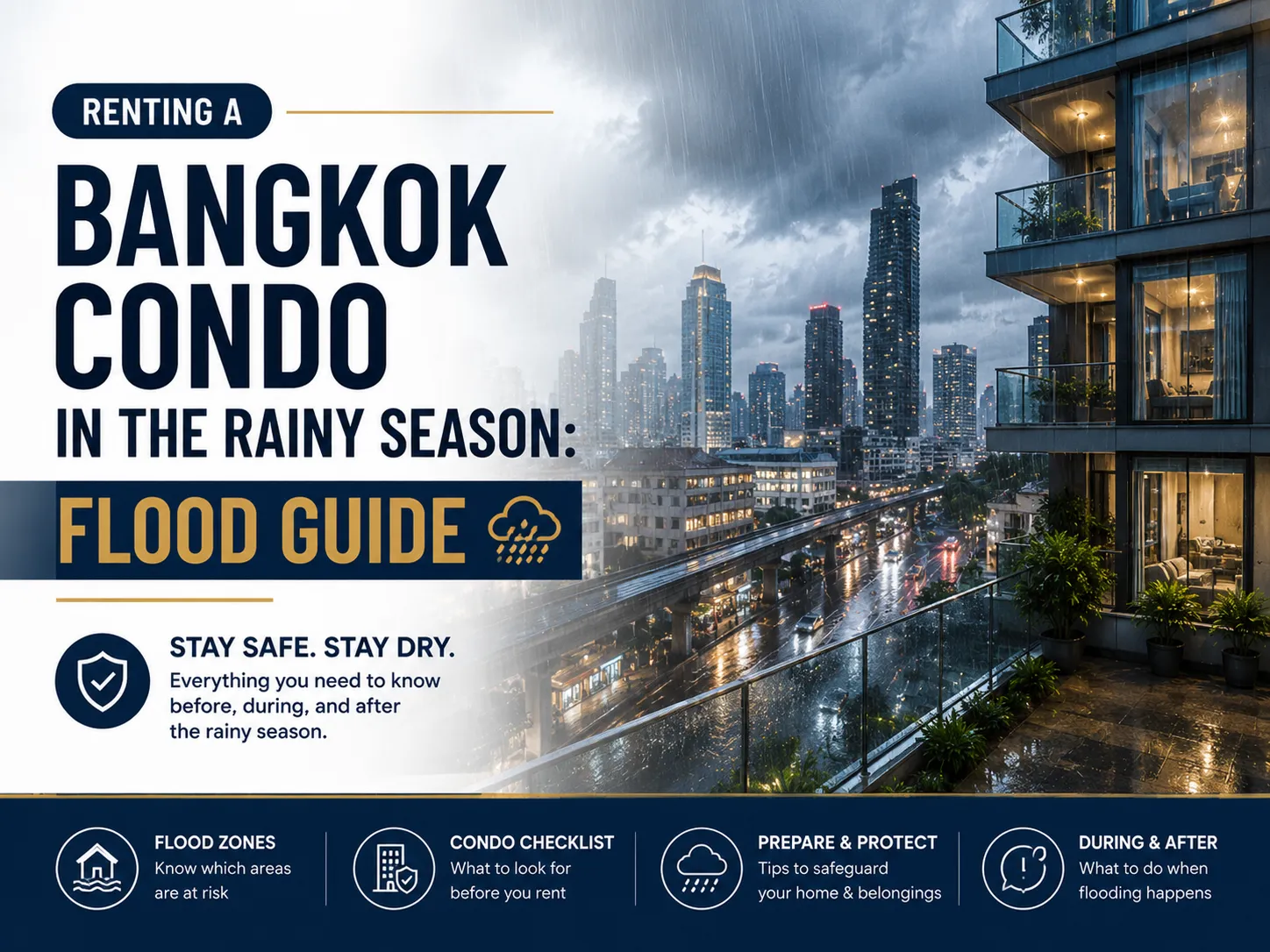
Renting a Bangkok Condo in the Rainy Season: Flood Guide
"A guide on selecting flood-resilient condos, assessing commute quality, and auditing project infrastructure during Bangkok's monsoon season."
auto_awesomeQuick AI Summary
Renting a Bangkok Condo in the Rainy Season: Flood & Commute Checklist
ℹ️ Renting a condominium in Bangkok during the monsoon season (May to October) requires evaluating street-level flood risks and walking accessibility. International tenants should audit project access roads, the presence of covered walkways to BTS/MRT stations, and building drainage infrastructure to prevent travel disruptions. Nebles compiles historical location data and offers digital E-contract coordination to secure flood-resilient properties.
---
💡 The Short Answer: How to Choose a Bangkok Condo in the Rainy Season
Prevent commute issues and check-in friction with a simple wet-season audit:
- Evaluate the Access Road: Confirm if the street outside the property is prone to standing water during heavy rain.
- Verify Pedestrian Access: Check if the route to the nearest BTS/MRT station features wide, unobstructed sidewalks.
- Look for Covered Drop-Offs: Ensure the building has a sheltered drop-off area so you can exit taxis without getting wet.
🎯 Who Is This Wet-Season Guide For?
- Expats & Corporate Relocators: Professionals moving to Bangkok during the monsoon season who need reliable daily commutes.
- Digital Nomads & WFH Workers: Remote workers who require stable electricity grids and reliable internet connections.
- Property Renters: Tenants searching for a long-term home who want a checklist to assess local infrastructure.
---
Why Is Location Auditing Crucial in Bangkok's Rainy Season?
During Bangkok's monsoon season (spanning mid-May through October), a property's convenience is tested by heavy rainfall and local drainage capabilities. Sourcing a condo solely via online maps or beautiful showroom photos carries risk. A quiet side-street (soi) that appears charming in dry weather may become impassable or experience slow drainage during a heavy downpour.
Expats should focus on the quality of physical access rather than simple distance metrics.
---
4 Critical Infrastructure Areas to Check Before Renting
1. Standing Water Risk on Project Access Roads
Ask the landlord or agent about the street condition before signing:
- How long does it take for the street outside to drain after rain stops?
- Is the condominium entrance elevated to protect the lobby?
- Booking Advice: Renters searching remotely should compile a safe overseas condo booking in Bangkok using platforms that check property history.
2. Pedestrian Commute Quality to BTS/MRT Stations
Do not rely on advertiser distance claims. Check the walking path:
- Is the sidewalk wide enough for pedestrians in the rain?
- Does the route feature a covered walkway, or are motorcycle taxis (win) readily available near the entrance?
- Short-Stay Guidelines: If you plan to rent for under 3 months, understand 1-month condo rental rules in Bangkok to prioritize properties with direct transit connections.
3. Building Management and Utilities
A resilient building prevents workspace and lifestyle disruptions:
- Power and Connectivity: Does the building experience frequent power fluctuations during storms? For information on registration and bills, read our guide to understand electricity, water, internet, and condo fees.
- Juristic Auditing: Before moving, check Bangkok condo juristic rules before move-in and ask if the building has sandbags and pump systems in place for underground parking zones.
4. Commuter Transit Alternatives
Select buildings that offer more than one path to your destination:
- Look for properties with multiple entry/exit gates to bypass congested roads.
- Ensure the condo features a spacious, covered drop-off area so taxi and delivery drivers can access the lobby easily.
---
Rainy Season Condo Suitability Matrix
| Auditing Parameter | Highly Suitable Properties | Properties Needing Review |
|---|---|---|
| Project Elevation | Main entrance and lobby are elevated above street level. | Ground floor is lower than the road; adjacent to canals. |
| Sidewalk Quality | Wide, well-lit sidewalks with covered walkways to transit. | No designated sidewalks; prone to standing water along curbs. |
| Backup Infrastructure | On-site generators support lifts and emergency corridors. | Lifts are shut down during heavy rain due to water leaks. |
---
Finding a Flood-Resilient Condo with Nebles
Nebles helps international renters avoid wet-season issues by verifying local conditions:
- Verified Sourcing: We evaluate property histories and confirm owner information.
- AI Matchmaker: Simply Complete AI Match before renting a Bangkok condo to identify suitable homes that match your transit, utility, and safety needs.
---
Future Signals
- Automated Flood Barriers: Luxury developments are installing water-activated barriers at parking ramps to block floodwaters.
- Transit Walkways: High-density zones are expanding skywalk connections to transit stations, keeping commuters out of standing water.
---
Conclusion & Legal Disclaimer
📢 Legal Disclaimer:
This guide is for general information only and is not legal, immigration, or financial advice. Requirements may vary by visa status, building rules, contract terms, owner arrangements, and official regulations. Confirm current requirements with official sources or qualified advisors before booking.
---
📞 Get in Touch (Consult & Support Team)
Need help finding a verified condo or preparing your lease agreement? Consult our support desk:
- 💬 WhatsApp Global: +66962435566 / Click to WhatsApp
- 💬 LINE Official: @nebles / Click to LINE
Interested in luxury living?
We have exclusive listings for the most premium residences in Bangkok. Join our exclusive list to get priority access to new listings.
Frequently Asked Questions
QIs the juristic person liable if the underground parking area floods?
Liability depends on the building's bylaws and whether building staff took adequate preventative steps. Tenants should maintain comprehensive car insurance that covers natural disasters.
QHow can I check if a condo is located in a slow-draining area?
You can check local flood advisory maps, check weather alerts, or consult with neighbors and nearby shopkeepers for first-hand feedback.
QWhich months see the heaviest rain in Bangkok?
September and October generally experience the highest rainfall and the most frequent street-level drainage delays.