
What Is a TM30 Receipt? Expat Guide & Landlord Non-Filing
"A guide for foreign tenants in Thailand explaining the TM30 receipt, its role in immigration compliance, and resolution workflows if a landlord fails to file."
auto_awesomeQuick AI Summary
What Is a TM30 Receipt? Expat Compliance Guide & Non-Reporting Solutions
ℹ️ The TM30 receipt (Section 38 confirmation slip) is the official proof that a landlord has registered a foreign national's residence with Thai Immigration. This document is required for visa extensions, 90-day reporting, and securing residence certificates. If a landlord fails to file, the tenant should gather their lease agreement and check-in records to coordinate directly with the immigration office. Nebles title-checks listings and coordinates E-contracts to ensure TM30 compliance.
---
💡 The Short Answer: What Is a TM30 Receipt and What If the Landlord Fails to File?
Secure your residence records with this quick wet-season and expat safety protocol:
- Request the TM30 Slip: Obtain a copy of the official online receipt screen or PDF from your host.
- Verify Information Accuracy: Check that your passport spelling, entry date, and condo unit number are correct.
- Take Action If Missing: Contact immigration with your signed lease and payment records if the landlord refuses to assist.
🎯 Who Is This Expat Compliance Guide For?
- Expat Renters & Nomads: Remote workers and long-term visa holders who need verified address certificates.
- DTV & LTR Visa Holders: Expats on premium visas who must submit address verifications to avoid visa renewal delays.
- Property Agencies & Managers: Professionals coordinating tenant transitions who want to standardize check-in compliance.
---
What Is a TM30 Receipt and How Does It Look?
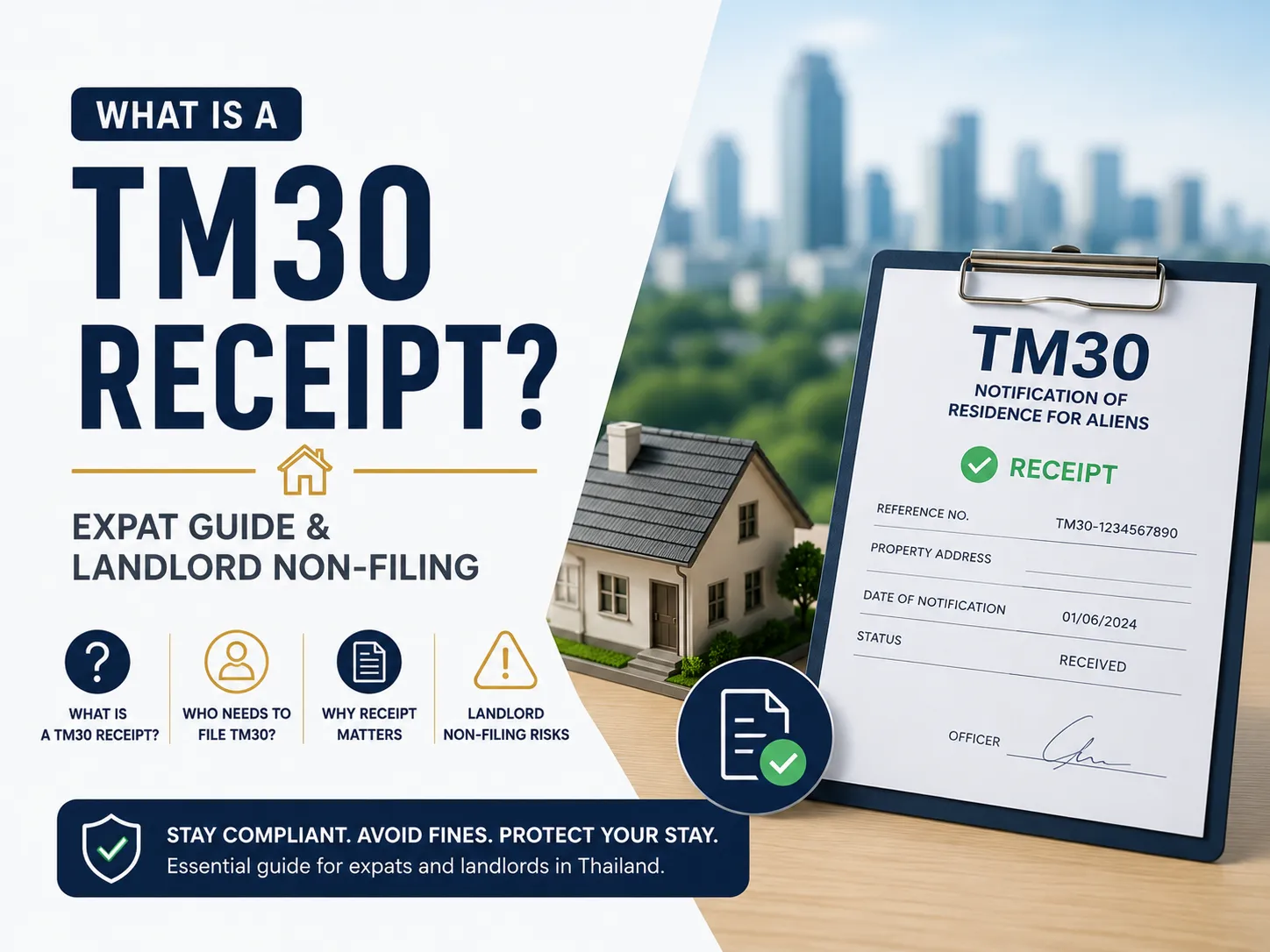
The TM30 receipt is the official confirmation issued by the Immigration Bureau indicating that a property owner has registered a foreign guest.
The receipt can be delivered in several formats:
- A printed, stamp-sized receipt slip issued by an immigration officer.
- An official PDF receipt generated by the TM30 online system.
- A screenshot of the approved tenant listing page on the landlord's online account, showing your passport number and status.
---
Lease Agreement vs. TM30 Receipt: Key Differences
| Feature | Rental Lease Agreement | TM30 Confirmation Receipt |
|---|---|---|
| Legal Purpose | Establishes the private rental contract between you and the landlord. | Confirms your physical address with the Thai government. |
| Parties Involved | Expat Tenant & Landlord. | Landlord & Immigration Bureau. |
| Expat Utility | Proof of occupancy and rental terms. | Mandatory document for visa renewals and 90-day reports. |
---
Action Plan If Your Landlord Fails to File the TM30
If your landlord is unresponsive, unfamiliar with the rules, or declines to submit the TM30 notification, follow these steps to secure your status:
1. Request the Registration in Writing
Send a polite message to the owner explaining that the TM30 receipt is required for your visa records. Hand over clear copies of your passport bio page, entry stamp, and visa page. If the landlord does not know how to register, share our guide on how to register TM30 online.
2. Add Compliance Terms to the Lease Contract
Before signing a contract, incorporate clear terms regarding TM30 filing timelines. Review standard templates and landlord duties in our guide on DTV TM30 landlord obligations.
3. Coordinate Directly with Your Local Immigration Office
If the landlord refuses to file, compile your signed lease agreement, security deposit transfer records, and passport. Take these to your local immigration office to report your stay and request guidance. For a complete list of required address verifications, read our guide on DTV visa address proof in Bangkok.
---
Expat Rental Protection Checklist
To ensure your stay remains compliant, audit your rental channel before paying booking fees:
- Title Auditing: Verify that the landlord legally owns the unit. Expats can prevent payment disputes by securing a safe overseas condo booking in Bangkok.
- Bilateral Matchmaking: Filter listings to find landlords who actively support expat reporting. Start by completing a Complete AI Match before renting a Bangkok condo.
---
Future Signals
- Self-Reporting Expat Apps: Future immigration apps will allow expats to self-report their addresses using GPS locations, notifying landlords automatically for confirmation.
- Cross-Department Databases: The Land Department and Immigration Bureau will sync databases, automatically generating TM30 logs when residential leases are registered.
---
Conclusion & Legal Disclaimer
📢 Legal Disclaimer:
This guide is for general information only and is not legal, immigration, or financial advice. Requirements may vary by visa status, building rules, contract terms, owner arrangements, and official regulations. Confirm current requirements with official sources or qualified advisors before booking.
---
📞 Get in Touch (Consult & Support Team)
Need help finding a verified rental or coordinating TM30 paperwork? Consult our support desk:
- 💬 WhatsApp Global: +66962435566 / Click to WhatsApp
- 💬 LINE Official: @nebles / Click to LINE
Interested in luxury living?
We have exclusive listings for the most premium residences in Bangkok. Join our exclusive list to get priority access to new listings.
Frequently Asked Questions
QCan I use a rental lease agreement instead of a TM30 receipt at immigration?
No. A lease agreement is a supporting document showing you have rented a unit, but immigration officers require the digital TM30 record to confirm your address in their database.
QCan I apply for a TM30 online account as a tenant?
No. The online registration system requires property ownership documents (Chanote/Tabien Baan), meaning only the legal landlord or an authorized agent can create the account.
QWho pays the administrative fine if the TM30 is submitted late?
The legal obligation is on the landlord. Under the Immigration Act, the landlord is liable for a fine between 1,600 and 2,000 THB.